
Artificial Intelligence (AI) is making significant strides in the healthcare industry, revolutionizing various aspects of patient care, diagnostics, and treatment. In this brief article, we will explore some of the groundbreaking AI-driven innovations that are transforming healthcare and their impact on both medical professionals and patients.
Improved Diagnostics
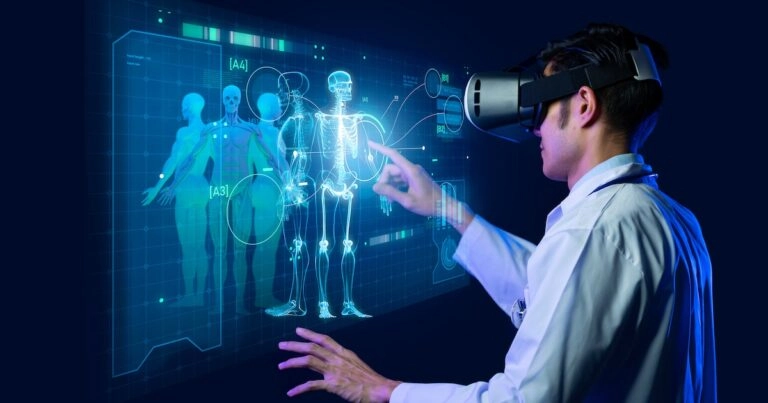
One of the most significant contributions of AI in healthcare is its ability to enhance diagnostic accuracy and speed. AI-powered algorithms can analyze vast amounts of medical data, such as medical images and electronic health records, to identify patterns and anomalies more quickly and accurately than human experts. This can lead to earlier detection of diseases, such as cancer, and improved treatment outcomes.
For example, researchers have developed AI algorithms capable of identifying lung cancer in CT scans with greater accuracy than radiologists. Similarly, AI-powered tools can detect diabetic retinopathy from retinal images, helping prevent vision loss in diabetic patients.
Personalized Medicine
AI is playing a crucial role in advancing personalized medicine, which tailors treatments to an individual’s unique genetic makeup, lifestyle, and other factors. By analyzing large datasets, AI algorithms can identify correlations between genetic variations, environmental factors, and disease risk, enabling the development of targeted therapies and customized treatment plans.
Moreover, AI can help predict how individual patients may respond to specific medications, reducing trial-and-error approaches and minimizing adverse side effects.
Enhanced Patient Care
AI-powered technologies are also improving patient care by streamlining administrative tasks and enabling better communication between healthcare providers and patients. For instance, AI-driven chatbots can answer patients’ questions, schedule appointments, and provide medication reminders, freeing up medical staff to focus on more critical tasks.
Remote patient monitoring systems powered by AI can continuously track patients’ vital signs and alert healthcare professionals to potential issues, enabling timely interventions and reducing hospital readmissions.
Drug Discovery and Development
The process of discovering and developing new drugs is time-consuming and costly. AI can significantly accelerate this process by analyzing vast amounts of data, identifying potential drug candidates, and predicting their effectiveness and safety. This can lead to faster development of life-saving medications and reduced costs for pharmaceutical companies.
Challenges and Future Prospects
Despite the numerous benefits of AI in healthcare, challenges such as data privacy concerns, ethical considerations, and the need for interdisciplinary collaboration must be addressed. As AI continues to advance and integrate into the healthcare industry, it holds the promise of improving patient outcomes, reducing costs, and revolutionizing the way we approach healthcare on a global scale.
